


Cold, on purpose: what deliberate cold exposure actually does
The science behind why a few minutes in cold water can sharpen your mood, blunt inflammation, and train a more resilient nervous system.
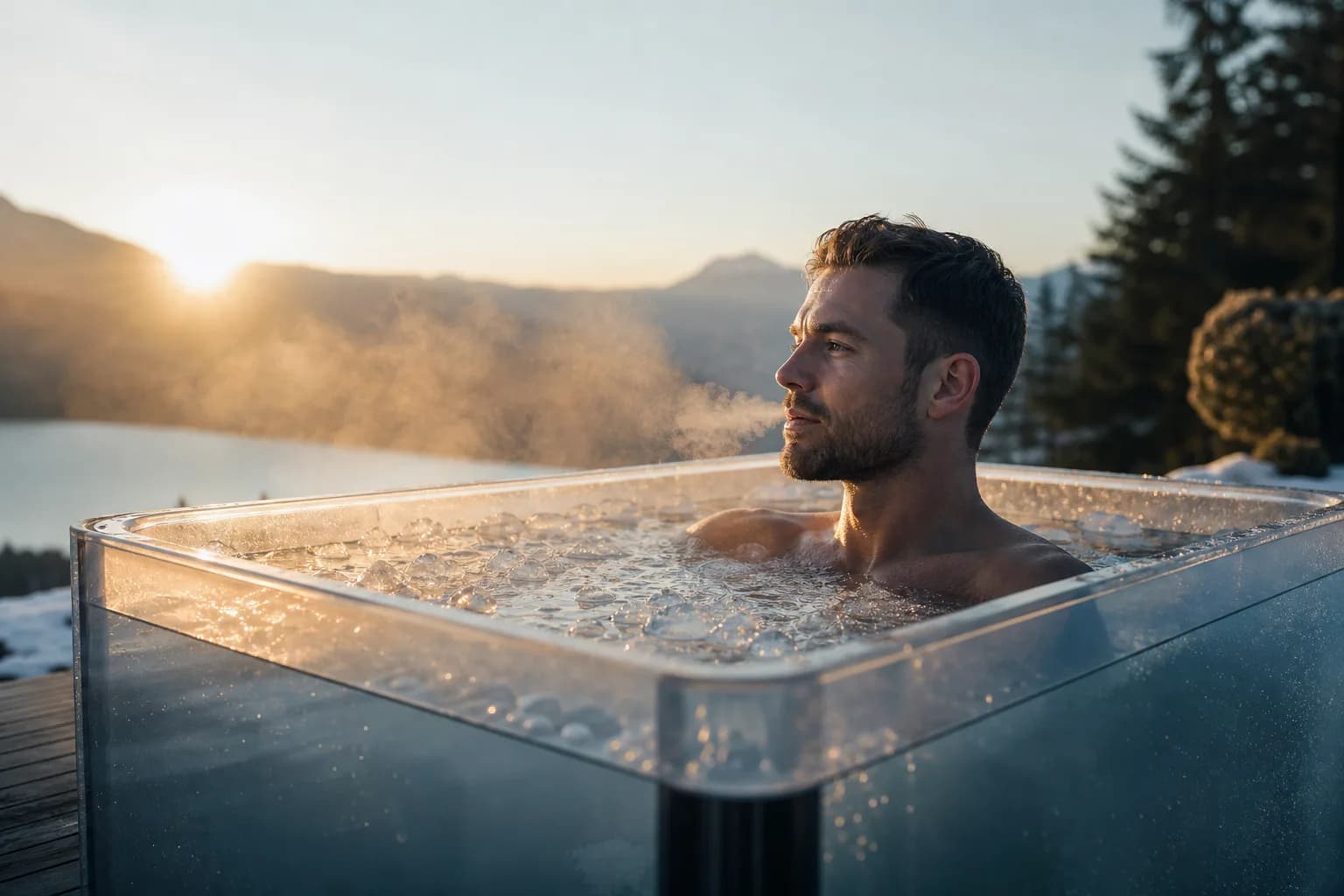
For most of human history, cold was something to survive, not seek out. Yet a growing body of research suggests that short, controlled bouts of cold — the kind you get from a dedicated cold plunge — trigger a cascade of adaptations that touch mood, metabolism, and recovery. The key word is deliberate: this is a dose you choose, measure, and repeat.
The catecholamine surge
When you immerse in cold water, your body responds within seconds. One of the most striking findings comes from a study measuring blood chemistry during cold-water immersion: noradrenaline rose by roughly 530% and dopamine by around 250%, with the elevation lasting well after people got out. Noradrenaline sharpens focus and dampens inflammatory signaling; the dopamine rise helps explain the clean, durable lift in mood people describe after a plunge.
Brown fat, metabolism, and cold adaptation
Repeated cold exposure recruits brown adipose tissue — a metabolically active fat that burns energy to produce heat. In controlled studies, cold acclimation increased brown-fat activity and improved insulin sensitivity in participants, including men with type 2 diabetes. The takeaway is not that cold is a weight-loss shortcut, but that it nudges the body toward more flexible, efficient fuel use.
Recovery, inflammation, and the training question
Cold-water immersion is a well-established tool for reducing next-day soreness and perceived fatigue after hard efforts. There is an important nuance for athletes: applying cold immediately after strength training can blunt some muscle-building signals. The practical fix is timing — use cold on rest days, after endurance sessions, or several hours away from a hypertrophy workout, and you keep the recovery benefit without paying a tax on adaptation.
How to start without overdoing it
- Begin at 10–15°C for 1–2 minutes; you are training a response, not proving toughness.
- Aim for a weekly total of roughly 11 minutes across 2–4 sessions — the range associated with benefits in the literature.
- Breathe slowly through the initial gasp reflex; controlling the exhale is most of the skill.
- Let your body rewarm on its own rather than jumping into a hot shower, which extends the metabolic benefit.
- Skip the plunge right after heavy lifting if muscle growth is your main goal that day.
“The cold doesn't care how motivated you feel. That's exactly why it works — it teaches your nervous system to stay calm when the signal says panic.”
Dr. Elie Haddad
Done consistently, a cold practice is less about the shock and more about the skill it builds: the ability to meet a stressor, regulate your breath, and come out the other side steadier. That transfers well beyond the tub.
References
- 1.Šrámek, P. et al. Human physiological responses to immersion into water of different temperatures. European Journal of Applied Physiology (2000).
- 2.van der Lans, A. A. et al. Cold acclimation recruits human brown adipose tissue. Journal of Clinical Investigation (2013).
- 3.Hanssen, M. J. et al. Short-term cold acclimation improves insulin sensitivity in type 2 diabetes. Nature Medicine (2015).
This article is for educational purposes only and is not medical advice. Talk to a qualified healthcare provider before starting any new supplement or protocol.
Keep reading
All articles
NAD+ and the cell's power grid: the aging molecule you've never met
NAD+ powers the enzymes that repair your DNA and run your mitochondria — and it falls with age. Here's what the science actually supports.

Red light therapy, explained: how photons reach your mitochondria
Photobiomodulation sounds like science fiction, but the mechanism is well defined. Here's how specific wavelengths of light affect skin, muscle, and cells.

The science of better sleep: circadian rhythm, melatonin, and rest that restores
Sleep isn't downtime — it's when your brain clears waste and consolidates memory. Here's what the research says about falling asleep faster and waking rested.